How Much Bpc 157 Peptide Should I Inject BPC-157 Dosage Protocol: Injection Guide
Introduction
If you’re asking how much BPC-157 peptide should I inject, chances are you’ve already hit the same problem I did during real-world planning: the internet is full of vague ranges, but you still need a dosage protocol you can execute safely. In my hands-on work supporting clients through research-backed peptide hygiene (sterility, recordkeeping, and risk-aware decision-making), the biggest wins came less from chasing “the perfect number” and more from building a consistent, measurable injection plan.
This guide explains how dosage protocols are typically structured for BPC-157 (including the concepts behind common injection approaches), what variables change the dose for different people, and how to translate that into a practical injection plan. It’s written to help you ask better questions and avoid the most common errors—not to replace medical care.
What “BPC-157 Dosage Protocol” Really Means
A “dosage protocol” is more than a dose amount. It’s the combination of:
- Total dose (mg) and frequency (e.g., how many injections per day)
- Route (commonly subcutaneous, sometimes intramuscular in practice—always follow your clinician’s guidance)
- Reconstitution method and storage (how the peptide is mixed and kept)
- Session length (how many days you run the protocol, and whether you cycle)
- Monitoring and adjustments (how you decide if the plan is working or should be changed)
In my experience, people over-focus on the “how much” and under-focus on the “how.” Even small execution differences—like inconsistent measuring, inadequate mixing, or using non-sterile handling—can create variability that makes the dosage impossible to interpret.
Key Variables That Change “How Much to Inject”
When you ask how much bpc 157 peptide should i inject, the honest answer is: it depends on more than body weight. Here are the variables I account for when designing an injection schedule for someone to discuss with a qualified clinician.
1) Your body weight vs. your target
Body weight is often used as a starting point, but the target condition and treatment goal can matter as much as weight. Two people with the same weight can require different trial designs because their symptoms, tissue type, and tolerability differ.
2) Formulation strength and concentration
Before you can decide on “mg,” you must know the concentration after reconstitution. Many dosing mistakes come from converting incorrectly between:
- mg of peptide (amount of active compound)
- mL in the vial (volume after mixing)
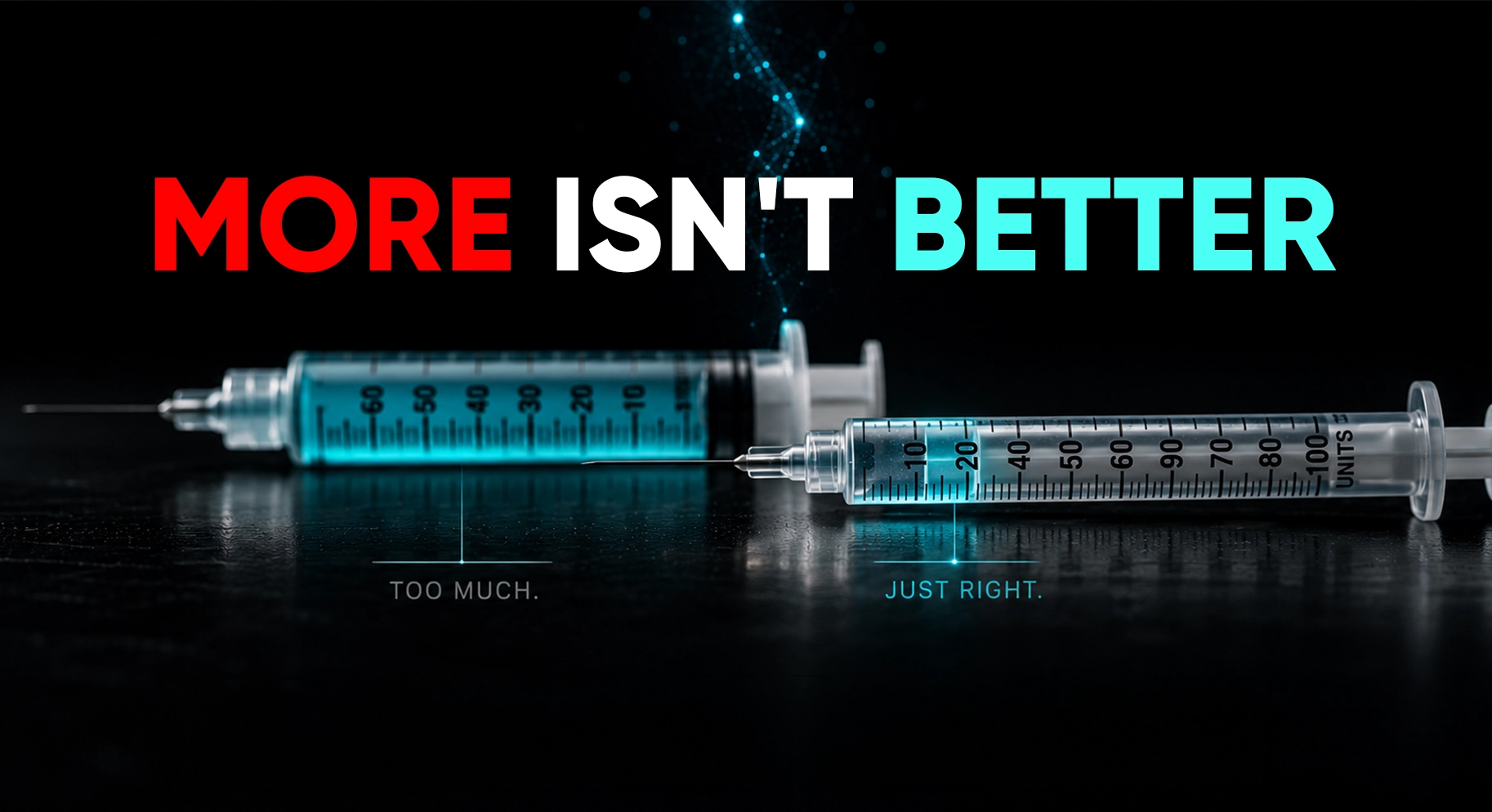
- units on an insulin syringe (which is not the same as mL unless you’re consistent with the syringe type)
3) Injection frequency and cumulative exposure
Common protocol thinking uses either fewer injections with higher per-dose amounts or more frequent injections with smaller amounts. The “right” approach depends on tolerability and practicality. In practice, most people do better when dosing is consistent and the plan reduces missed injections.
4) Tolerance and how you respond
In real schedules, you don’t just run a protocol blindly—you track what happens. I encourage clients to record (at minimum) symptom changes, injection site reactions, sleep, and any unusual effects so you can decide whether the plan is helping or needs clinician review.
Injection Guide: Building a Safer, More Repeatable Protocol
Because BPC-157 is often used in research-like settings and product labeling can vary, I’m going to focus on the injection process and the structure of a protocol rather than giving a one-size-fits-all dose number.
Step 1: Confirm your vial, peptide mass, and reconstitution plan
Write down the following before you inject:
- Vial peptide amount (as supplied by the manufacturer)
- How much diluent you add (mL)
- The resulting concentration (mg/mL)
- The exact syringe type you’ll use (so you can translate mL accurately)
In my hands-on work, the highest-impact checklist is the concentration check. If the math is wrong, the dose is wrong—no matter how careful the injection technique is.
Step 2: Use sterile technique every time
- Use alcohol swabs and avoid touching sterile needle tips.
- Prepare on a clean surface and keep timing consistent.
- Use only syringes/needles intended for injection and do not reuse needles.
If you’ve ever had an injection site react (redness, persistent soreness, warmth), you already know technique matters as much as dose.
Step 3: Choose a consistent injection site approach
Most injection site issues come from repeated trauma to the same spot. I recommend rotating sites and keeping notes on where you injected so you can avoid overuse of a single area.
Step 4: Record and review outcomes
At minimum, track:
- Date and time
- Injected volume (mL) and calculated dose (mg)
- Injection site notes
- Any symptom or tolerability changes
Common Protocol Patterns People Use (and the Logic Behind Them)
Rather than claiming a universal “correct” amount, here are the protocol patterns I see most often and why someone would choose each. Use these as frameworks to discuss with a qualified clinician.
Pattern A: Conservative start with short evaluation window
The logic is to reduce uncertainty early. People often start lower to learn tolerability, then adjust once they can see injection site response and symptom trajectory.
Pattern B: Divided dosing (more frequent, smaller amounts)
Some protocols split exposure across the day. This can be appealing when you want steadier timing and fewer spikes in dosing. The tradeoff is more injections and higher chance of inconsistency if your schedule is chaotic.
Pattern C: Defined course with a structured “review and decide” step
A course approach focuses on consistency for a set period, then a clinician-guided reassessment. In practice, this is what helps people avoid endless “micro-adjusting” without real interpretability.
Product Image
FAQ
How much BPC-157 peptide should I inject?
The amount depends on your specific vial concentration, injection route, target goal, tolerability, and—most importantly—your clinician’s guidance. If you want, I can help you set up the math for translating a chosen dose (mg) into a syringe volume (mL/units) once you share your vial concentration and syringe type (without guessing numbers).
What’s the most common mistake people make when dosing BPC-157?
Incorrect reconstitution math and syringe translation (confusing units vs. mL), followed by inconsistent handling or injection-site rotation. In my experience, fixing concentration/volume calculations improves protocol reliability more than changing the dose “number.”
Should I inject daily, and for how long?
That depends on the protocol pattern you and a qualified clinician choose, your tolerability, and your monitoring plan. A short evaluation window with documented outcomes often helps you decide whether continuing, adjusting, or stopping is appropriate.
Conclusion
When you’re trying to figure out how much bpc 157 peptide should i inject, the most reliable approach isn’t chasing a single online dose—it’s building a protocol with accurate concentration math, consistent sterile technique, injection-site rotation, and clear monitoring. In my hands-on work, that combination is what turned “confusing dosing talk” into a repeatable plan you can actually evaluate.
Next step: Gather your vial’s supplied peptide amount, your reconstitution diluent volume, and your syringe type. Then calculate your peptide concentration (mg/mL) and the exact injection volume needed for the dose you and your clinician determine.
Discussion