
6 min read | 12 July 2024 | Key words: IPv6 migration, IPv4 exhaustion, IPv6 security, Dual-stack
Background and importance of IPv6
The transition to IPv6 is crucial because IPv4 addresses are running out. Although IPv6 was created to meet the increasing demand for internet connections, moving from IPv4 to IPv6 hasn’t been any easy. This ongoing reliance on IPv4 makes us wonder if a complete switch to IPv6 is really necessary.
Adopting IPv6 presents several challenges. Businesses, users, and network administrators face technical difficulties, compatibility issues with older systems, cost concerns, and the complexity of managing systems that run both IPv4 and IPv6.
This discussion points out the challenges of adopting IPv6, suggesting that not all organizations need to fully switch right away. By understanding IPv6’s complexities, companies can plan their transition more effectively, ensuring smoother integration and addressing key barriers.
The difference between IPv4 and IPv6
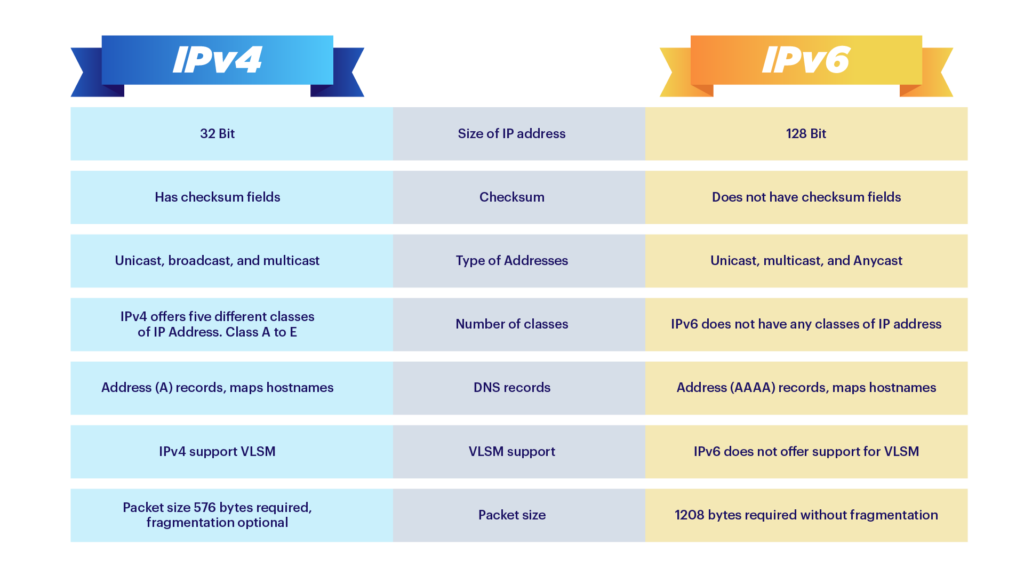
IPv4 and IPv6 are the two main Internet Protocols. There are significant differences between them. For example, IPv4 can be divided into five different IP address classes, whereas IPv6 uses a different format that does not rely on address classes. The following chart shows a detailed comparison of IPv4 and IPv6:
Why Migrate to IPv6?
IPv4 address exhaustion
Currently, the remaining available IPv4 addresses cannot support the growing demand. Since IANA assigned the last batch of unused ip to the RIR in 2011, there is a shortage of IPv4 addresses. It’s hard to rely solely on using nearly 4.3 billion IPv4 addresses to serve more than 14 billion connected devices
Today, instead of applying for IP addresses from the RIRs, businesses turn to the market to lease and buy IP addresses. As a result, the price of IPv4 addresses is climbing every year. Large companies with a lot of money can buy IPv4 addresses. However, small and medium-sized enterprises are somewhat hindered by renting IPv4 addresses.
Advantages and improvements of IPv6
IPv6 offers several key enhancements to IPv4 that significantly benefit the evolving internet landscape:
- Expanded Addressing and Efficiency: IPv6 provides a nearly unlimited pool of IP addresses to accommodate the rapid growth of online devices, crucial for the Internet of Things (IoT). It also simplifies packet processing with streamlined header formats, improving routing efficiency and reducing network strain.
- Robust Security: IPv6 inherently supports IPsec, enhancing network security with comprehensive measures that ensure data confidentiality, authentication, and integrity.
- Enhanced Network Performance: The protocol improves multicast and Quality of Service (QoS), essential for high-bandwidth applications like streaming media. This leads to better network reliability and performance, meeting the demands of modern internet usage.
These improvements position IPv6 as a scalable and robust solution, ready to support the current and future requirements of global internet infrastructure.
Biggest challenges of IPv6 adoption
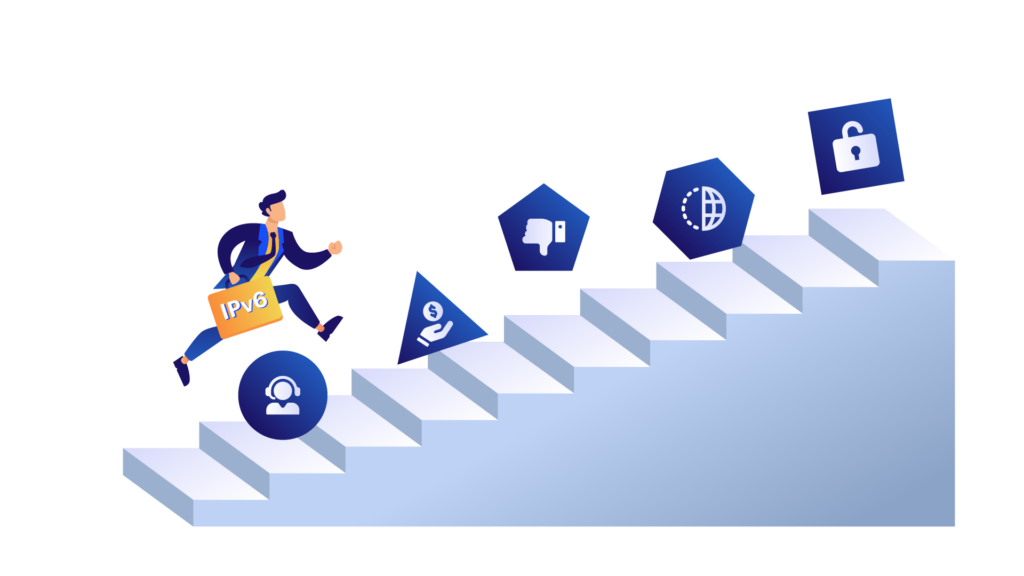
In some respects, IPv6 is better than IPv4. But why is IPv6 adoption still sluggish? These are some of the most common issues concerning IPv6:
Lack of IPv6 specialists
Some companies, such as small businesses, are not ready for IPv6. They usually outsource service providers to handle new technology due to a lack of technology specialists. It requires costs and time if they outsource service providers to handle the move from IPv4 to IPv6, which is not attractive to them.
High costs of devices
High costs of devices are one of the challenges to foster IPv6 deployment. An IPv4 router may not support IPv6. Businesses might need to replace devices that are not IPv6-friendly, which means never convenient or cost-efficient.
Low user willingness
Customers are not pushing for change. There are some customers who do not understand or care about IPv6. It means that companies can’t be motivated to move forward. And it’s possible for users to complain endlessly if shifting to IPv6 comes with technical obstacles.
Network adaptation
Many ISPs are not yet equipped to support IPv6 traffic. Some internet service providers may not be able to handle IPv6 routing protocols, translate IPv4-only websites into IPv6 or support IPv6 DNS resolution.
Security issues
IPv4/IPv6 tunneling mechanism is vulnerable to attacks. IPv6 over IPv4 tunneling encapsulates IPv6 packets within IPv4 headers, allowing packets to be carried over to the IPv6 routing infrastructure. However, routers do not check the content of the packets. Additionally, addresses of IPv6 hosts and relay routers are vulnerable to spoofing.
Solutions During Migration
Despite the challenges, businesses can smoothly migrate to IPv6 by using effective strategies and solutions. Following best practices and utilizing the right tools will help overcome these hurdles and ensure a seamless transition.
Best Practices for Implementing IPv6: Start with a thorough network assessment to understand current capabilities. Develop a phased implementation plan, test in controlled environments, train staff, and update documentation accordingly.
Security Measures and Recommendations: Implement IPsec for secure communication, configure robust firewalls, and regularly update security protocols. Educate network administrators on the unique security aspects of IPv6 to prevent potential vulnerabilities.
Optimization Strategies for Network Adaptation: Use dual-stack configurations to run both IPv4 and IPv6 simultaneously, allowing for a gradual transition. Utilize monitoring tools and performance metrics to ensure efficient network operation.
Cost Reduction Methods: Manage expenses by leveraging existing infrastructure and focusing on incremental upgrades. Explore funding opportunities and partnerships that can provide financial support or resources for the transition.
Conclusion
Necessity of Using Both IPv4 and IPv6
The transition to IPv6 is essential but it won’t make IPv4 outdated right away. A dual-stack approach will allow both protocols to coexist, ensuring continuity and compatibility during the shift to IPv6.
Future of IPv6 Migration and Its Costs
Migrating to IPv6 requires investment in infrastructure and training, But the benefits, such as better security, more address space, and improved performance, justify the cost. As more organizations switch, shared knowledge and economies of scale will reduce expenses and simplify the process. Embracing IPv6 is vital for staying competitive and meeting the internet’s growing demands.