10 min read | 19 Dec 2025 | Key words: IPv5, Internet Stream Protocol, IPv4 Address exhaustion, IPv4 leasing, IPv6 Address migration
The Enigma of the Missing IP Version
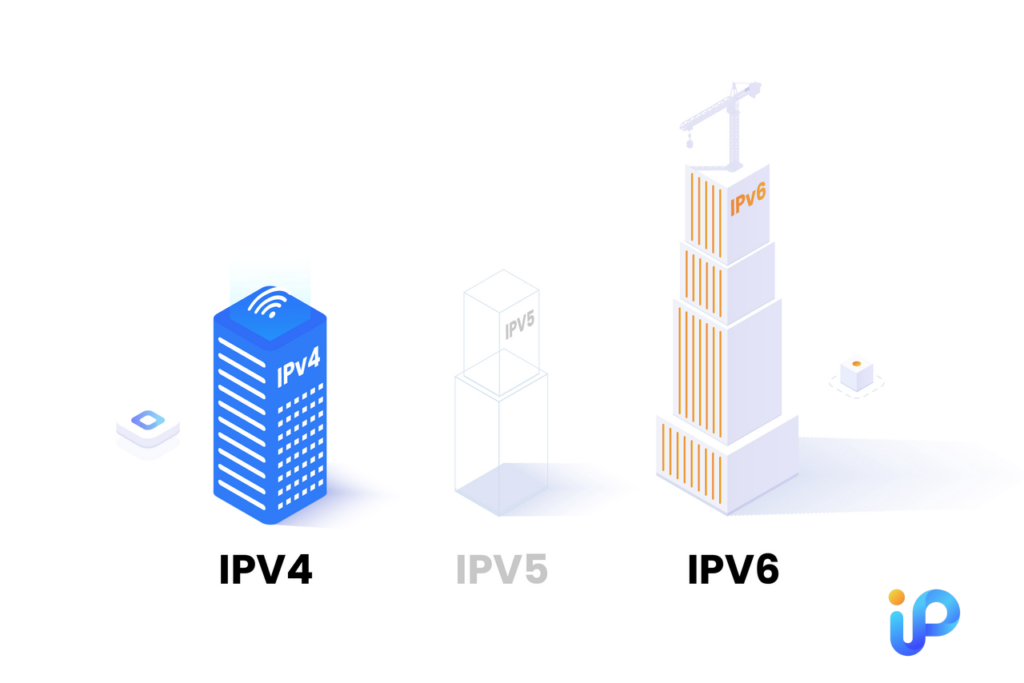
Everyone is familiar with IPv4 Address and IPv6 Address. We know the internet is in the process of a major transition from the old to the new standard. But have you ever stopped wondering: If there was an IPv4 Address and an IPv6 Address, what happened to IPv5 ? Why did we “skip” a version?
This isn’t a story of a failed protocol or a simple numbering error. The truth behind IPv5 is a fascinating and often-overlooked chapter in internet history. This article will reveal the real story, explaining that the role and purpose of IPv5 were entirely different from what most people assume.
Understanding IPv4 Address and IPv6 Address
To unlock the mystery of IPv5, we first need a quick refresher on its two siblings:
- IPv4 Address (1983–present): The foundation of the modern internet. With its 32-bit address system, IPv4 Address offers about 4.3 billion addresses. Due to explosive growth of the web and connected devices, this pool is now exhausted (fewer are usable publicly due to reserved ranges).
- IPv6 Address (standardized in 1998): This is the long-term solution to address exhaustion. Its 128-bit address system provides a virtually limitless number of addresses, enough to support the world’s devices for the foreseeable future.
These two versions are like the main highways of the internet: broad, general-purpose, and designed to carry all types of traffic.
What IPv5 Actually Was
The mystery begins with a protocol officially called the Internet Stream Protocol (ST), later revised as ST2. This was assigned version number 5.
- Purpose: ST was an experimental protocol focused on real-time streaming of audio and video.
- Design: It introduced a connection-oriented model with resource reservation to reduce latency and jitter. In other words, it tries to give certain traffic (like voice or video) a fast lane through the network.
- Limitations: It was never designed to solve the looming problem of address exhaustion, so it was never a true successor to IPv4 Address.
Think of it this way: while IPv4 Address and IPv6 Address were designed to be the general roads of the internet, IPv5 Address was an experiment to build a special high-speed lane just for real-time traffic.
Why IPv5 Was Never Publicly Adopted
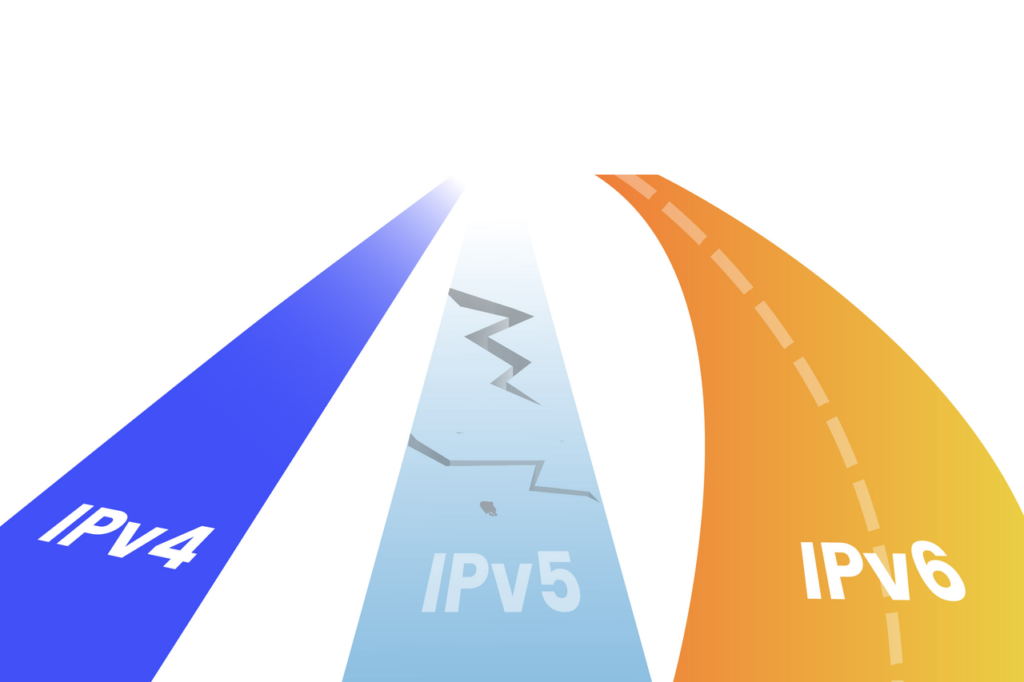
IPv5 wasn’t a failure; it simply served a different purpose. It was never a candidate to replace IPv4 Address’s core function for three reasons:
It didn’t address scarcity: The biggest challenge for the future internet was running out of unique IP addresses, which ST did not solve.
Other tools took over: Real-time media standards such as the Real-time Transport Protocol (RTP, RFC 3550) handled audio/video delivery over UDP, while QoS solutions like RSVP/IntServ and DiffServ evolved to prioritize traffic without a separate IP version.
Naming clarity: Because version number 5 was already used, when the Internet Engineering Task Force (IETF) selected the next-generation IP (IPng), they designated it IPv6 Address instead of IPv5.
Lessons from the IPv5 Story
Experimental protocols play a critical role, even if they don’t become global standards, they shape later solutions.
IPv6 Address adoption was delayed not because of IPv5, but due to the complexity of global migration and workarounds like NAT.
Real-time communication (video calls, streaming) succeeded thanks to protocols running on top of IP, not because of a new version of IP itself.
IPv4 Address Is Not Out, and We Can Help You Thrive
While IPv6 Address is the future, IPv4 Address is still very much the present. The vast majority of the internet’s infrastructure and devices continue to rely on it. For many businesses, particularly those with existing systems, migrating to IPv6 Address is a complex and costly endeavor. IPv4 Address remains a reliable and highly effective solution for a wide range of applications, from hosting websites to running enterprise networks.
This is where IPv4 Superhub comes in. We understand that accessing high-quality, reliable IPv4 address space is crucial for your business. IPv4 Superhub offers a complete suite of IPv4 Address services, including leasing, buying, and selling addresses. We provide a seamless, secure, and fully managed platform to help you acquire the IPv4 Address resources you need, ensuring your operations remain stable and scalable.
Don’t let the talk of IPv6 Address migration rush you. Take a strategic approach and partner with a company that can secure your IPv4 Address needs for the long term.
👉 Contact IPv4 Superhub today and let us help you maximize the value of this essential internet protocol.